How I Shop For Groceries and Stay in Budget
First — I plan, I research (The stores weekly ads) and then I inventory.
Before shopping, I always check the **weekly store ads**. Most stores release them online or in app form, and they show what’s on sale that week. This helps me decide *where to shop* and *what to buy*. For example, if one store has a great deal on chicken breasts and another has discounted fresh produce — I’ll split my shopping between the two.
Next — I make a list. (actually several) One foe each area and then I merge them.
Before I make a list, I stand in front of the pantry, fridge, and freezer and ask:
👉 What do I already have?
👉 What needs to be used soon?
This keeps me from buying duplicates and reduces food waste. I write things down or make a quick photo so I don’t forget.
Menu Planning is a Game Changer.
I plan meals by week (sometimes by month!) so that each list has purpose. Some tips that help me:
Weekly Plan:
* Monday: Stir-fry with frozen veggies + rice
* Tuesday: Tacos with sale-priced ground turkey
* Wednesday: Pasta night with a homemade sauce
* Thursday: Chicken and roasted veggies
* Friday: Leftovers or a simple soup
* Weekend: DIY pizza or salad bar
This way nothing goes to waste, and I know exactly what I need.
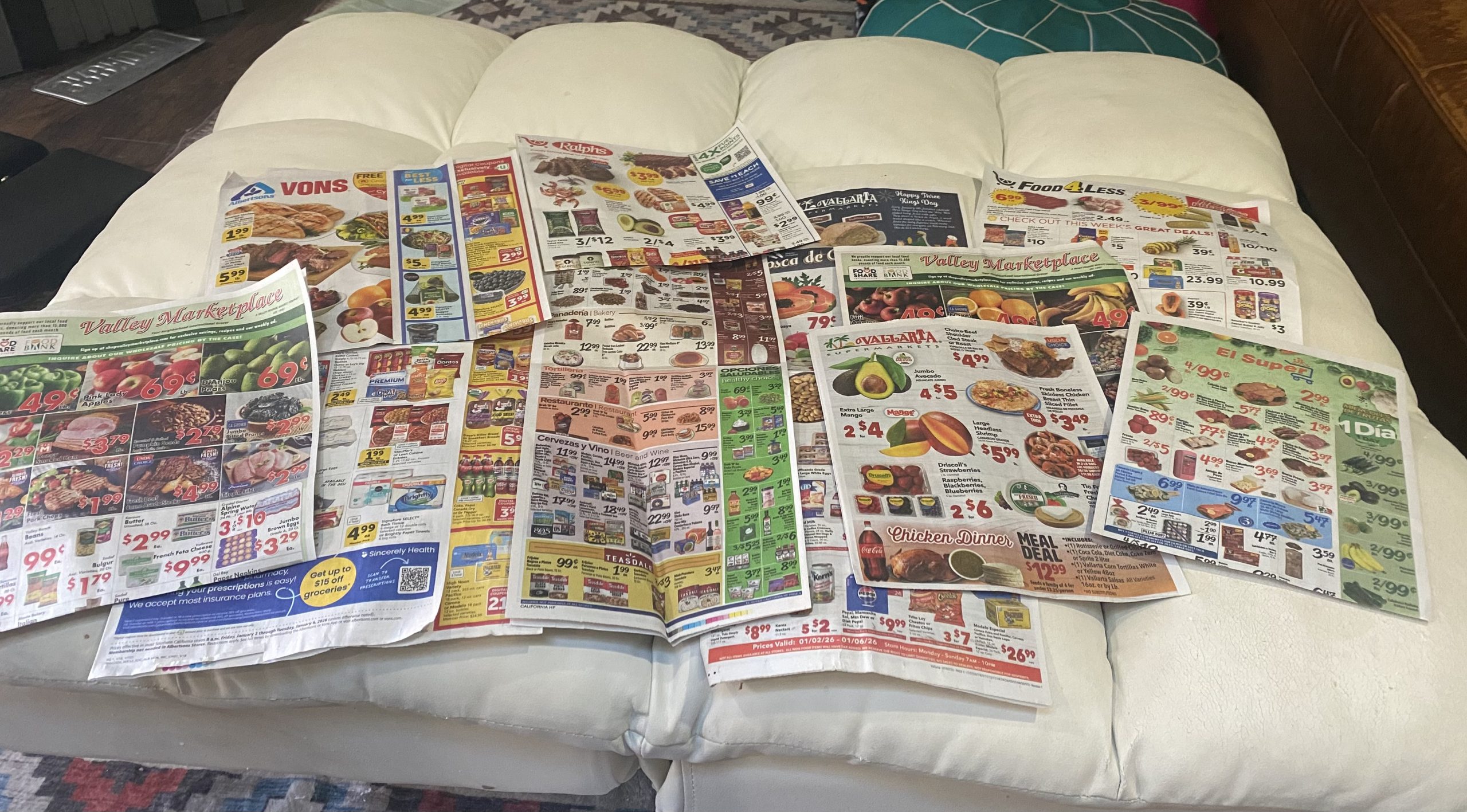
I Watch for sale cycles & markdowns.
Most stores have a predictable sale cycle — usually meat and produce go on sale every 7–10 days. If I see chicken on markdown or meat nearing its sell-by date (still fresh!), I stock up and freeze for later. Same goes for bread, bakery items, and produce that freeze well.
When It Makes Sense…I Buy in Bulk
For things you *use often* — rice, beans, oats, cheese, frozen veggies — buying larger sizes or bulk packs usually works out cheaper per unit. Just make sure you’ll use it before it goes bad, or can freeze it.
I shop in multiple stores (if needed).
I know it sounds extra, but if store A has killer deals on meat and store B has cheaper dairy or produce — splitting up your trip can add up to real savings. I plan stops so I’m not making extra trips *just* to save a couple dollars — it has to be worth it.
**Bring a calculator (or use your phone!).**
As I shop, I do quick math on unit prices — like price per ounce, pound, or package — to know I’m really getting the best deal. Sometimes the big flashy price tag isn’t actually the best value.
A few extra tips that help me:
💡 Freeze leftovers or extra portions so meals stretch longer.
💡 Prep ingredients ahead — chop veggies or pre-cook meat so weeknight dinners are easier.
💡 Don’t shop hungry! You’re more likely to grab stuff you *don’t need*.
💡 Keep a running list on your phone so you don’t forget essentials.
—
**Bottom line:**
Grocery shopping smart isn’t about buying the cheapest stuff — it’s about **planning, tracking sales, using what you already have, and making intentional choices**. You can absolutely eat well *and* stay within your budget if you go in with a plan!
If you want, I can help you build a printable template for meal planning and pantry inventory too 😊
—
You must be logged in to post a comment.